The Ultimate Backyard Water Slide Party Checklist for Stress-Free Hosting
Picture the first squeal as a kid rockets down a glossy blue lane, a burst of spray catching the sun, neighbors peeking over the fence with a grin. Backyard water slide parties look effortless from the outside, and they can be, if you plan the details that don’t make Instagram. Done well, you’ll feel like you hosted a small resort for an afternoon and still had the energy to enjoy it.
I’ve set up slides on patchy lawns and on perfectly manicured turf, in quiet cul-de-sacs and on sloped driveways that required a rethink. I’ve dealt with water main breaks, unexpected wind gusts, and parents who sent toddlers in socks. What follows is a complete, lived-in checklist and guide that respects your time, your budget, and your yard, whether you plan to rent water slide attractions just once or make waterslides for backyard parties a summer tradition.
Start with the party you actually want
Before you look at water slides for rent, sketch the day in your head. What ages are coming? How many people, really? How long will the slide run, and how much you want to supervise versus mingle?
If you’re hosting a birthday party water slide blowout for a group of 7 to 10 year olds, a 15 to 18 foot single lane inflatable slide with a splash pool usually hits the sweet spot. Teens love speed and competition, so a 19 to 22 foot dual lane model keeps lines moving and the bragging rights alive. For preschoolers, keep it low and soft, ideally a 10 to 13 foot combo unit with a bounce area and gentle water feature.
Capacity matters more than height. A single lane slide comfortably handles 40 to 60 slides per hour if kids move briskly. A dual lane can double throughput. For a guest list of 20 kids, a single is fine. If you’re inviting two classes or a full soccer team, spend for the double and thank yourself later.
Space, slope, and surface are non-negotiable
A lot of headaches vanish when the site fits the equipment. Most inflatable rentals list exact footprints, and they are bigger than they look in photos. Add at least five feet of clearance on all sides for safety and staking, and check height for trees and eaves. If the slide is 18 feet tall, you want open sky, not a branch that turns into a sprinkler-snag.
Grass is gentler on stakes and bare feet, but level concrete or pavers can work if the vendor uses sandbags. A gentle slope is fine, but anything steeper than 5 percent creates fast entries into the pool end, which is rough on younger kids and makes attendants nervous. If in doubt, ask the rental company to FaceTime a site check. Good operators will tell you no to a bad spot, then help you find a better one.
Water has to go somewhere. A 15 to 20 foot slide with a splash pool might use 500 to 1,000 gallons to fill, then more during play as the pump continues to run. On recirculating setups, that water cycles, but splash-out is real. If your yard has a low corner that turns to muck after a rain, either lay tarps and towels there or push the slide to a different section to protect your turf.
How to choose the right rental partner
When you search for inflatable rentals, you’ll see everything from solo operators with a pickup to larger outfits with online booking and text updates. Either can be fantastic. The difference shows up in response time, backup equipment if a blower fails, and how they handle weather. I look for the following signals:
- The company lists proof of insurance and can add you or the venue as additionally insured on a certificate if asked.
- Photos look like real inventory, not stock images grabbed from a manufacturer’s site.
- They ask about power and water, and give clear specs. One slide typically needs a dedicated 15-amp circuit and a 50 to 100 foot hose from a working spigot.
- Policies are written, not vague. You should know delivery windows, cancellation terms for lightning or high winds, and cleaning procedures.
If you’re wading through search results and odd phrases, you might run into “inflatable rentals water” or “rent waterslide near me.” Use those to broaden results, then call two or three companies. Ask about weekend demand spikes, especially in July and August. Good vendors book out 2 to 4 weeks in summer, and prime times go first.
Expect typical pricing to range from 250 to 450 dollars for a 13 to 15 foot unit, 350 to 600 for a 16 to 18 foot slide, and 550 to 900 for 19 to 22 foot dual lanes, depending on your market and the day of the week. Holiday weekends carry premiums. Delivery distances, stairs, and hard-to-access yards can add fees.
Quick site check before you book
Use this short list to confirm the slide will fit and work without drama.
- Measure the footprint plus five feet on each side, and check overhead clearance for branches, cables, and eaves.
- Verify you have a dedicated outdoor GFCI outlet within 75 feet, or plan for a vendor-provided generator.
- Test a hose bib for flow and leak, and confirm you have 50 to 100 feet of standard hose in good condition.
- Walk the water exit paths, and plan where splash-out will drain without flooding your neighbor.
- Note any sprinkler heads, landscape lighting, or uneven pavers that could snag the inflatable or trip a child.
Safety worth insisting on
A water slide looks like a giant toy. Treat it like a small amusement ride. The rules are simple, and enforcing them keeps the party out of the ER and your vendor out of repair mode.
Ask the company about wind limits. Most commercial inflatables should come down above 15 to 20 mph sustained winds, or lower if gusty. If a storm is forecast, align your timeline to get the most use early. Make sure the slide is secured with stakes or properly weighted sandbags. Stakes should be driven fully flush with the ground, not a tripping hazard.
Electrical safety is basic but critical. Use only grounded outlets with GFCI protection and keep connections off wet grass. I’ve seen vendors set plugs on upside-down buckets to keep them dry. It looks clunky, but it works.
Set a clear rule: one slider per lane at a time, feet first, wait until the previous kid clears the bottom. For toddlers, assign an adult at the top and at the splash pool. Keep long jewelry, glasses, and hard toys off the slide, and avoid cotton socks, which turn into skates when wet.
Sunscreen matters as much as water. Encourage families to sunscreen at home, then set a reapply station near the shade. Hydration sneaks up on kids who are too excited to drink. Provide a self-serve water cooler and cups where they line up, not on the other side of the yard.
The booking call that saves you an hour
When you’re ready to rent water slide equipment, call your chosen vendor and treat the conversation like a small project kickoff. Share the exact party window, and ask for setup two hours before guests arrive. If traffic or another delivery delays them, you still have a cushion. Confirm the model name, dimensions, and lane count. Ask if the unit has a built-in pool or a splash pad end. Pool versions hold water in a basin, which feels more like a mini pool day, but they use more water and need more drainage. Splash pad ends are shallower and better for mixed ages.
Ask if the rental includes hoses, a mister line, and a GFCI adapter. Many companies bring their own hose for the slide’s built-in sprayer, but you’re responsible for the house-to-slide hose. Confirm the blower amperage and whether you’ll need one or two circuits.
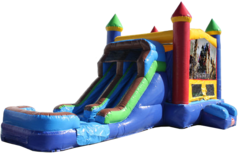
Clarify the cleaning routine. Reputable operators sanitize contact surfaces before each delivery. If they look at you blankly, move on.
Day-of timeline that keeps you sane
This lightweight schedule works for a 2 to 3 hour party window with an 18 foot single or dual lane slide. Adjust for your start time and guest ages.
- Two hours before guests: Vendor arrives, inspects site, and sets up. You test the water sprayer, check blower power, and walk the drainage path.
- Ninety minutes out: Shade and seating go up, food prep moves to a shaded table, water coolers fill, speaker playlist set to sane volume.
- Thirty minutes out: Safety briefing with any helpers, towels staged, sunscreen station stocked, dry zone cordoned off for shoes and phones.
- At start: Greet families with a quick, friendly safety script and show the line start. Assign one adult as “slide captain” for the first 30 minutes.
- Ten minutes before cake: Announce last runs, shut water at the bib, let kids do final dry slides to minimize drips, then gather for singing.
Water slide party ideas that build a vibe
Theme lightly. Water and laughter do most of the work. Pick a color palette and tie it to two or three elements. Blue and lime for tableware, a simple balloon garland near the slide, and beach towels rolled in a basket. For a birthday party water slide theme, hang a name banner at the fence and add fun touches like pool noodles fashioned into an entrance arch with zip ties.
Music helps the pace. A summer playlist at conversational volume keeps the energy friendly. Let parents hear each other without shouting. If you have close neighbors, a quick note on their door the day before, with the party window, preempts friction.
Hand out colored wristbands if you’re mixing age groups. Blue for under 6, green for older kids. Then plan five-minute blocks twice each hour when only blue bands slide. The rest of the time, everyone goes. It sounds fussy on paper, but in practice it prevents the smallest kids from getting edged out.
Add simple, low-cost games that don’t fight the main attraction. A ring toss or water balloon target gives kids a reason to take a break and helps spread the crowd. Avoid heavy crafts, which turn into soggy mush in the spray.
Food that works with wet hands
Skip messy red sauces and anything that turns slippery. Think one-hand bites and sealed servings. Mini sandwiches, fruit on skewers or in cups, pretzels, and frozen bars go faster than you expect. If you add a grill, pre-cook or par-bake to reduce your time away from guests. For drinks, large insulated dispensers with spigots beat a cooler of cans that leaves you fishing in icy water while kids drip on your shoes.
Set a clear dry zone for food. It helps to stage one small table near the slide for water cups and nothing else, then a bigger food table at least 20 feet away on dry ground. If you serve cake, plan to pause the slide water five to ten minutes before so kids arrive a bit less soaked, and designate two towel tubs, one for “mostly dry,” one for “need a wring-out.” You’ll cut the footprint of drips through the house in half.
Shade, seating, and the adult corner
Adults will stay if they are comfortable. Pop-up tents or a shade sail make a huge difference, even on a day that doesn’t feel that hot. Aim for one seat per two adults, plus a clean, dry surface for phones and keys. A small “device valet” bin with labeled zip bags earns gratitude when the unexpected splash happens near the chairs.
Create one dry conversation corner. It keeps shoes and phones safe, and it gives you a place to stash backup towels, a first-aid kit, and extra sunscreen. If toddlers are coming, choose a corner with visibility to the slide exit so adults can keep an eye out without hovering.
Weather plans that actually work
Rain is manageable. Lightning isn’t. If thunder rolls, power down blowers and clear the slide until 30 minutes after the last lightning strike. Reputable companies will quote weather policies up front. Some offer a rain check within 12 months, others allow same-morning rescheduling if winds exceed limits. Document your agreement by text or email.
High wind can be more disruptive than drizzle. Gusts at 20 mph will push a tall inflatable around, even when staked. If the day looks breezy, aim for an earlier start when winds are typically calmer, and consider a shorter, wider unit. I’ve had parties that ran beautifully from 9 to 11 in the morning, then we powered down as the afternoon wind picked up.
Heat matters too. The vinyl surface can warm quickly, especially on darker slides. Running the mist line constantly cools the lanes, but set a rule for flip-flops or water shoes off the slide to avoid face-first landings with sandals tangled around ankles. A cheap infrared thermometer can be useful; if a surface reads too hot to the touch, cue a shade break.
Budget without surprises
The rental fee is your anchor, but a smooth event includes small line items that add up. Expect to spend:
- 350 to 600 dollars for a mid-size single lane slide in many suburban markets.
- 40 to 80 for ice and beverages, assuming water coolers and some juice for kids.
- 30 to 60 for extra hoses, splitters, or GFCI extension if you need them.
- 20 to 40 for disposable tableware and hand towels.
- Optional 50 to 100 for a generator if your outlet is too far or underpowered.
- Optional 40 to 100 for shade rental if you don’t own pop-ups.
- A tip of 10 to 20 percent for a delivery crew that communicates well, arrives on time, and leaves your yard tidy.
Water cost is modest. A thousand gallons at typical municipal rates runs 5 to 10 dollars in many areas. The bigger factor is lawn recovery if your turf saturates. Tarps under high traffic zones help, but expect a patch or two to look tired for a week.
Working with your yard, not against it
Every yard tells you where a slide belongs. If your flat patch is small, pick a vertical inflatable slide with a compact footprint. If you have length but not width, a slip and slide style with a runout works well and drains along the long axis of your grass. Consider the sun arc. A slide that bakes in full sun may make the first half hour thrilling, then a bit harsh. Angling the entrance into partial shade reduces glare and heat.
If you’re on artificial cheap waterslides for backyard parties turf, ask the vendor about heat and weights. Turf can get hot, and sandbag placement matters to avoid dents. Never stake through turf. If you’re hosting on concrete, lay thick moving blankets or foam squares at the exit to cushion knees.
Watch for nearby hazards. Pools must be fenced off from the inflatable zone. Grills belong nowhere near a mist line and blower. Keep the blower intake clear of towels and grass clippings, and place it where kids cannot sit or lean into it.
Running the line without turning into a referee
The number one flow-killer is a vague start point. Mark a clear line with cones. Establish one adult as a friendly starter for the first half hour until the rhythm feels natural. Then swap out every 30 minutes to keep the vibe upbeat.
When the crowd is big, give kids a pool noodle “baton” to signal whose turn is up next. It cuts down on “no, I was here” debates. Encourage two quick slides, then to the back of the line. For younger sets, parents standing within arm’s reach at the ladder help, especially when brave kids decide to turn around mid-climb.
If you’re hosting a wide age range, schedule micro-blocks. Announce by the speaker, “Little sliders for five minutes,” twice an hour. Older kids will grumble on the first pass, then accept it as routine. Nobody wants to be the big kid who knocks a toddler into the pool.
After the last splash
A good teardown starts before the crew returns. Shut off water ten minutes before end time so kids can take two or three “dry runs.” It reduces puddles and mud at the exit and shortens the vinyl wipe-down. Pull hoses to the side, coil loosely, and let the slide drip while kids shift to cake or goodbyes.
Walk the yard with a towel and a trash bag, collecting stray wristbands, juice pouches, and the inevitable orphaned sock. If the crew arrives and sees that you cared for their equipment and space, they almost always reciprocate with a thorough, respectful breakdown.
Expect the grass to look flattened. Resist the urge to power rake. Let it dry a day, then give a light mow and a little water to lift the blades. Muddy patches recover faster if you lay a piece of breathable landscape fabric for a day rather than creating a greenhouse effect with a plastic tarp.
Real-world hiccups and how to fix them
A few sticky moments I’ve seen more than once, and the simple fixes that saved the day:
- Low water pressure. The mist line dribbled, and kids slid slower. Solution: remove one quick-connect splitter, run a single hose direct to the slide sprayer, and ask the vendor to check for kinks. If pressure is inherently low, angle the sprayer heads closer to the lanes. In a pinch, a garden sprayer adds a targeted burst at the top for the first rush.
- Unexpected wind. Gusts hit 20 mph mid-party. We paused, let the vendor add sandbags to front D-rings, turned the slide 15 degrees to take wind on the side, then resumed with stricter one-at-a-time rules. We cut the session 20 minutes early when gusts returned, and because we communicated early, parents handled the pivot well.
- GFCI trips. A damp connection popped the breaker. Elevating the plug on a plastic bin and adding a fresh GFCI adapter solved it. Always know where your outdoor breaker resets live before the party starts.
- Mud at the landing. The grass by the pool turned to slop by the second hour. We rotated the exit mat 90 degrees to a drier patch and laid a second towel runway. Long-term fix is a breathable mat under the exit if you host regularly.
A word on rules, HOAs, and permits
Most residential parties don’t need permits, but two checks prevent surprises. If you share walls or live in a community with HOA rules, confirm quiet hours and temporary structure guidelines. Do not block sidewalks with equipment or delivery trucks. If you’re hosting in a public park, rules change. You’ll often need a permit, a certificate of insurance from the inflatable rentals company naming the city as insured, and generator power since outlets are scarce. Plan those requests two to three weeks out.
If you’re thinking bigger
You can scale a backyard event into a block party feel by adding a second attraction, but do it intentionally. A foam cannon plus a single lane slide gives two distinct zones that split the crowd. A combo bouncer with a small inflatable water feature near the toddler area keeps preschoolers from wandering to the big slide. Resist the urge to add too many elements. Two high-quality activities beat four mediocre ones that dilute supervision.
If your search for water slides for rent returns a lot of options, narrow with your goals: fast throughput, mixed ages, or visual wow. For purely visual impact, a 20 foot inflatable slide in a bold color looks fantastic in photos. For function with varied ages, a 16 foot dual lane with splash pad is the workhorse.
Keep the spirit, not just the gear
You’re not just renting vinyl and a blower. You’re creating a memory kids will connect to your home and your family. The little touches carry far. Greet each child by name if you can. Keep a basket of dollar-store goggles and hair ties. Add a chalkboard sign with three rules in kid language: feet first, wait your turn, big kids help littles.
When you scan for vendors, you’ll see phrases like rent water slide, inflatable rentals water, or general inflatable rentals. The label matters less than the operator’s care. People remember that the slide shined, that there were enough towels, that the music was fun but not wild, and that parents could talk without shouting. They remember that the birthday kid lit up for three straight hours.
With a clear plan, a reliable partner, and a few practiced tricks, waterslides for backyard parties can be as simple as turning on the hose and as polished as any venue. You’ll wrap the cord, wave to the last car, and realize your house can host summer better than rent water slide any splash pad. And the grass will be fine.